
Workstation Personalization Policy: How to Let Employees Personalize Their Workspace (With Guardrails)
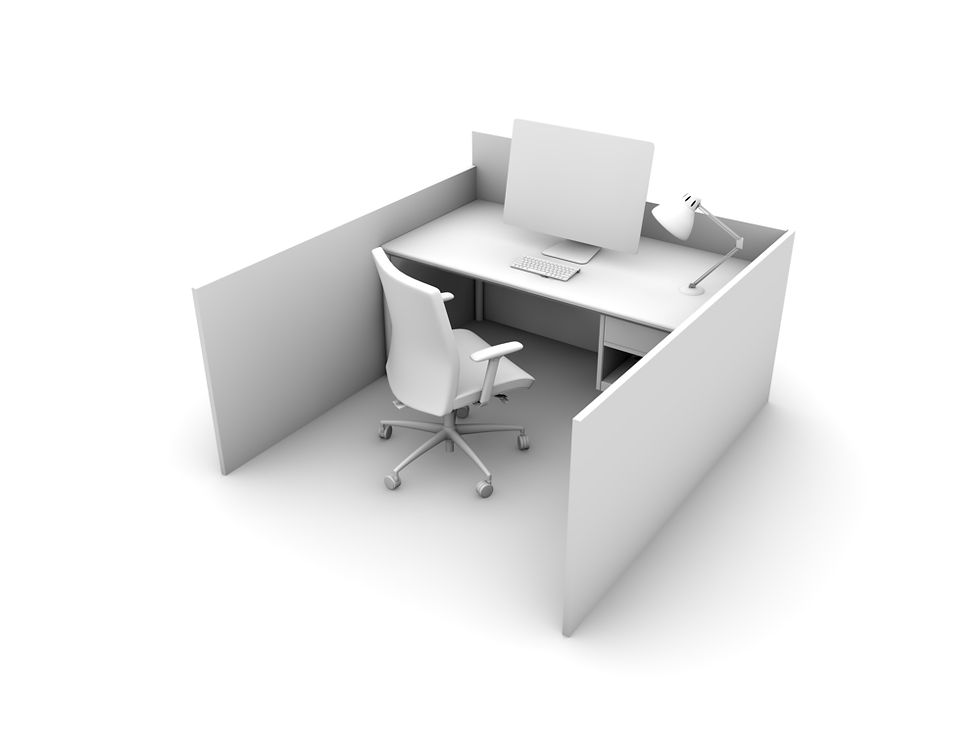
The smartest workplace design doesn’t fight personal expression. It plans for it.
If you’ve invested in a cohesive, professionally designed office, the idea of employees tacking up posters, swapping out accessories, and rearranging furniture probably makes you a little twitchy. That’s understandable. You spent real money creating a workspace that reflects your brand, supports productivity, and looks good when clients walk through.
But here’s the thing: locking down every surface and standardizing every detail comes with a cost you might not see on a line item. Employees who feel no ownership over their physical environment tend to disengage from it. And disengagement manifests in turnover, absenteeism, and the quiet erosion of the energy that makes a workplace actually work.
Giving employees a sense of autonomy, which comes with some personal control over their surroundings, is consistently linked to lower workplace stress, stronger mental well-being, and higher job satisfaction. You don’t have to sacrifice your design standards to get those benefits. You just have to plan for personalization instead of policing it.
The real risk isn’t personalization. It’s the absence of a framework for it. That's where a workstation personalization policy is key.
When companies don’t create intentional space for personal expression, two things tend to happen. Either employees personalize anyway, and it looks chaotic, or they don’t personalize at all, and the office feels like a bad movie set. Both outcomes work against you. The first undermines your brand. The second undermines your culture. The fix isn’t a stricter policy. It’s better design.
6 ways to build a workstation personalization policy into your workspace design
1. Specify tackable surfaces
If you’ve got systems furniture, this one is simple. Tackable panels are a standard specification. You can take it a bit further by adding an accent tile and designating it as a personalized area. For private offices, fabric-wrapped tackboards, wall-mounted shelves, or bookcases provide employees with a designated zone for photos, notes, and personal items. When there’s a clear “this is your space” boundary, people tend to respect it. When there isn’t, personalization creeps and sprawls because there’s no obvious place for it.
2. Choose a flexible accessories system
Most commercial office furniture manufacturers offer modular desktop accessory products. Think, tool rails with interchangeable bins and desktop organizers that can be arranged in different configurations. When the system itself is flexible, employees get the personalization they need, and you get visual consistency. Both sides win.
3. Offer choice within a curated palette
Instead of a single chair color and a single accessory set for every workstation, consider giving employees two or three options that all work within your design scheme, then letting them choose which ones they want. A small amount of controlled choice delivers a disproportionate sense of ownership.
4. Design for the visual horizon
The systems panel or wall directly in an employee’s line of sight when they look up from their screen is prime real estate for personal expression. If you leave it as a bare, blank surface, it will eventually get covered with whatever people can find. If you design it with intention, such as a framed insert area, a small shelf, a tackable zone at eye level, you channel that impulse productively. Employees get a visual micro-break that supports mental health and focus. You get a workspace that still looks intentional.
5. Let employees control their ergonomics
Adjustable monitor arms, keyboard trays, task lighting, and task chairs with intuitive controls aren’t just ergonomic tools. They’re a form of personalization that directly impacts physical comfort, and physical comfort is inseparable from mental well-being. When employees can fine-tune their workstation setup without submitting a facilities request, they feel trusted and autonomous. When they can’t, every minor discomfort becomes a reminder that they don’t have control over their own workday. Specify furniture that empowers individuals to adjust without compromising the overall workstation layout.
6. Set guardrails, not mandates
The most effective personalization policies are short, clear, and framed positively. Instead of a long list of things they can’t do, give employees a simple framework. Something like: keep it to your workstation footprint, keep it professional, and keep it to a level where a client walking through would notice your work before they notice your stuff. When you frame personalization as something the company supports rather than tolerates, employees respond by being more thoughtful about it, not less.
The mental health case you can actually make to leadership
If you need to build internal support for this approach, here’s the business case in plain language. Employees who feel psychological ownership over their workspace report lower stress, higher engagement, and a stronger connection to their team and company. Those aren’t soft metrics. They translate directly into reduced turnover costs, fewer sick days, and better performance. Giving employees room to make their workspace feel like theirs is one of the lowest-cost, highest-return investments you can make in workplace mental health, and it’s baked into the furniture specification rather than bolted on as a wellness program.
Trilogie is a commercial office furniture dealership helping businesses design workplaces that balance brand consistency with personal expression. We specify office furniture that gives employees ownership of their workspace in a professional environment because the best workplaces don’t just look right; they feel right, too.


