Meeting Fatigue Is Real: How to Fix Your Meeting Culture
If you’re blocking time to “recover” from your meetings, you’re not being dramatic. You’re experiencing one of the most expensive and least-discussed productivity drains in the modern workplace, and one of the quieter contributors to workplace burnout.
The average professional spends 15+ hours a week in meetings. Research from Microsoft and the Harvard Business Review puts the cost of unnecessary meetings at hundreds of billions of dollars annually, and the hidden cost is even higher. Every hour someone spends in a meeting they didn’t need to be in is an hour they weren’t doing the actual work on their list. Multiply that by twelve people in a room and do the math.
What that number doesn’t account for is the mental load. Constant context-switching between meetings fragments concentration, elevates stress, and leaves people feeling busy but not actually accomplished. That feeling (the one where you worked all day and can’t point to anything you finished) is one of the fastest paths to disengagement. And disengagement, over time, is a mental health issue with a very boring origin story: too many calendar blocks.
A lot of meetings aren’t bad; people just do them wrong. They’re bad because the defaults are wrong: the default length, the default invite list, the default room, and the default lack of agenda. Fix the defaults, and a surprising amount of the pain goes away.
7 ways to have fewer painful meetings
Default to 25 or 50 minutes.
Outlook defaulting to 60 minutes doesn’t mean every conversation deserves 60 minutes. Shorter meetings force the actual point to surface faster, leave breathing room between calls, and dramatically reduce the number of 12-minute tangents about the font on the slide deck. That breathing room also matters for your nervous system — back-to-back meetings with no transition time are genuinely stressful, a stress that compounds throughout the day. Try it for two weeks and report back.
No agenda, no meeting.
This is the hill we’re willing to die on. If the meeting organizer can’t articulate what the meeting is for and what a good outcome looks like, then there should not be a meeting. That’s important information! A one-line agenda is better than nothing. A shared doc with context and pre-read materials is even better. Meetings that start with “so, what are we here to discuss?” are a $200-per-hour question nobody budgeted for.
Invite fewer people.
If someone’s only there to be informed, they can get notes afterward and continue enjoying their afternoon. The right invite list is whoever needs to contribute to the decision — not whoever might feel left out of the loop. Bonus: fewer unnecessary meetings mean more time for the work that actually gives people a sense of progress and accomplishment. That matters more for morale than most companies realize.
Try standing meetings.
Standing-height meeting tables exist for a reason. Humans enjoy sitting, so standing meetings end sooner because everyone has a physical incentive to wrap them up. If it should genuinely take 15 minutes, hold it standing and move on. Light movement between meetings also helps regulate cortisol, which is a fancy way of saying it takes the edge off a stressful day. Your team’s lower backs will also thank you.
Match the room to the meeting.
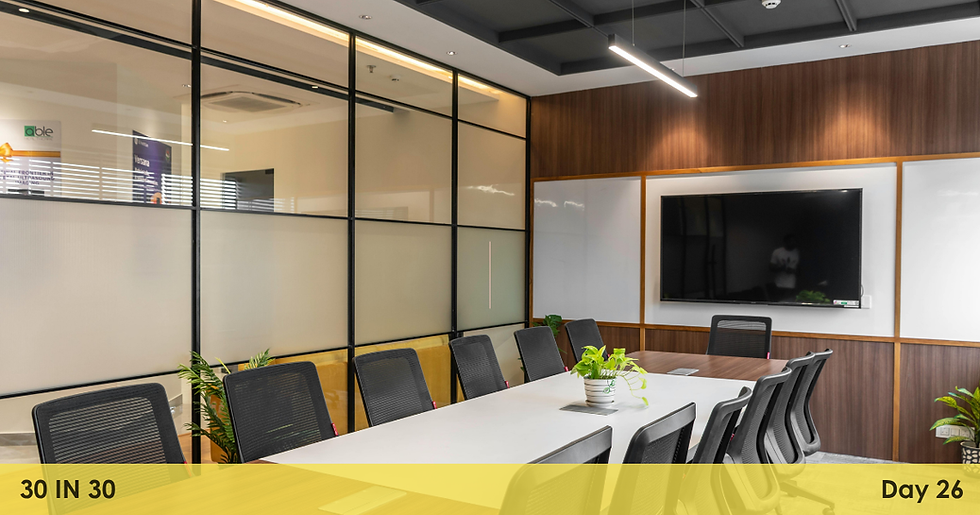
A quick check-in does not need the giant conference room with the imposing rectangular table and twelve empty chairs. That setup signals “this is serious and formal” even when the conversation is supposed to be casual and generative. Brainstorms need writable walls and informal seating. One-on-ones need a small private space — and private spaces matter more than people think, because a lot of important conversations simply won’t happen in the open. Strategy sessions need room to spread out. Client presentations need to impress. Your physical environment is quietly shaping how every conversation unfolds, and most companies never think about it until something feels off.
Protect meeting-free time as if it were a business asset.
Because it is. Deep, focused work, the kind that actually moves projects forward, cannot happen in 20-minute windows between calendar blocks. And for many people, that uninterrupted time isn’t just productive; it’s restorative. It’s the part of the day when they feel capable and in control. When that disappears, engagement follows. Try blocking full mornings or entire days as meeting-free and watch what that does for productivity and mental load.
End with real next steps.
Every meeting should close with three things: who owns what, what happens next, and when it’s due. Without those three things, you’re not ending a meeting; you’re scheduling the next one. Which will also have no agenda. And twelve people in it. Ambiguity after meetings is its own stressor. People leave unclear on what’s expected of them, and that low-grade anxiety has a way of following them home.
A note from the Trilogie team
Workspace design is one of the fastest levers you can pull on meeting culture — and most companies don’t realize it until they’ve already rearranged the calendar three times and nothing has changed.
The size and setup of your meeting rooms shape how people behave in them before anyone says a word. A room designed for 12 that’s consistently used for 3 sends a subtle signal that something is off. No huddle rooms means every conversation ends up competing for the same conference room. No standing-height options means no natural incentive to keep things short. No writable surfaces means brainstorms default to PowerPoint decks. (Courtnay despises PowerPoints with the heat of a thousand suns. This is a safe space to admit you feel the same way.)
The physical environment is also part of the wellness equation. Spaces that give people privacy when they need it, options for how to work, and relief from the pressure of constant visibility support mental health in ways that a free snack bar simply cannot.
When we design office spaces, we’re thinking about the full spectrum of how work actually happens. The right mix of room sizes, furniture heights, acoustic privacy, and collaboration tools isn’t just for aesthetics. It’s operational infrastructure. And increasingly, it’s a wellbeing strategy.
If your meeting culture is broken, some of it might be behavioral. But some of it might be your floor plan.
Trilogie is a commercial office furniture dealership designing workspaces that support focused work, productive collaboration, and yes — fewer meetings that should’ve been emails.